An open field in the last hour of light
Tall grass or a harvested field catches low sun and hides uneven ground. Shoot with the sun behind your shoulders, never behind the faces.
Photoshoot ideas
A photoshoot plan is really three decisions: the light, the place, and what everyone does with their hands. Pick the situation below, then borrow the twelve setups that work in real light.
Skip to the twelve setups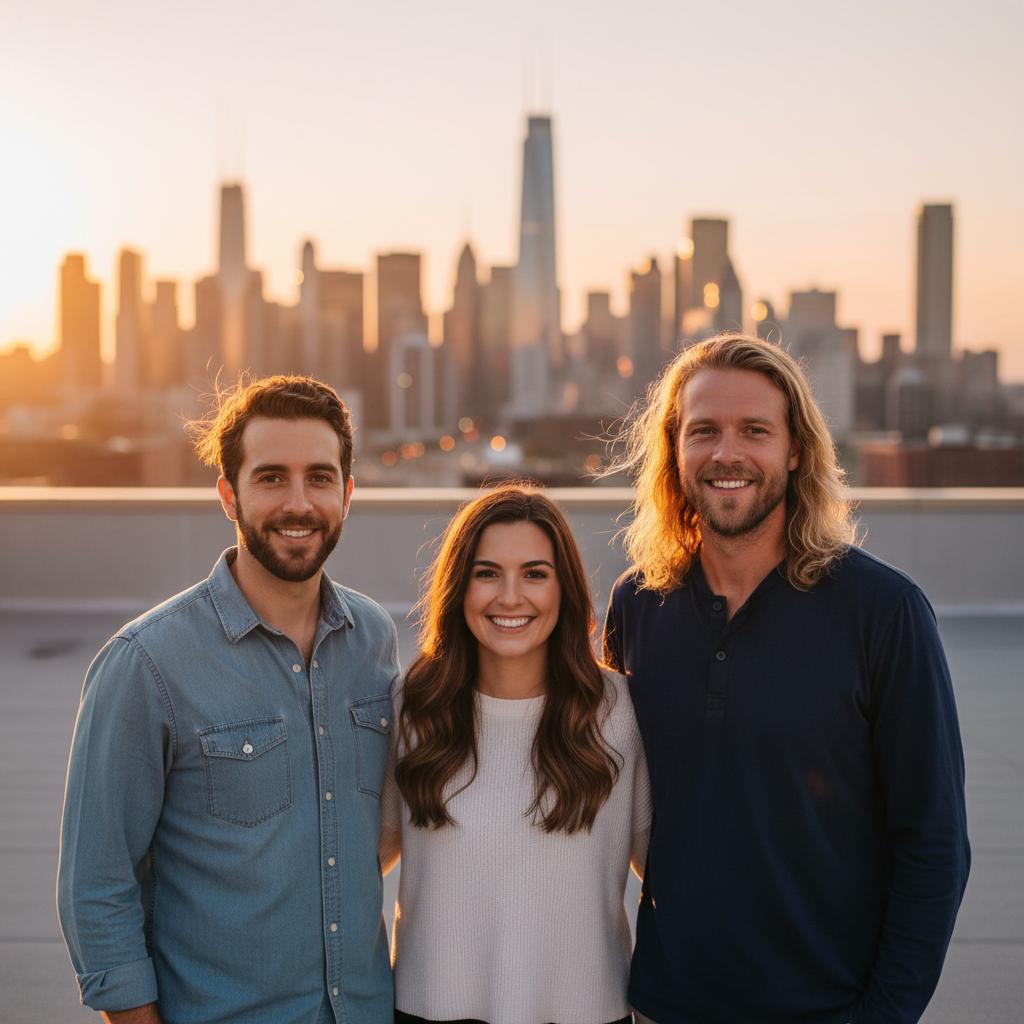
Pick your situation
Each one covers the light, the timing and the arrangement for that group.
Twelve setups
Tall grass or a harvested field catches low sun and hides uneven ground. Shoot with the sun behind your shoulders, never behind the faces.
A porch gives you shade, a frame and somewhere to sit. Stagger people across two levels instead of lining them up on one row.
Turn off the ceiling lights and sit side on to a single window. This is the most reliable option on a rainy day and the most flattering light in most homes.
A trail, a canal path, the route to school. Walking hides awkward hands, keeps children moving, and rarely looks staged.
Give everyone something to do with their hands. Baking, cards or a shared meal produce better photographs than a posed line up.
The ten minutes after sunset even out the sky and let city lights fill the shadows. Keep the skyline behind you and stand close together.
A lake, a dock or a quiet shoreline doubles your light. Calm water works far better than crashing surf for portraits.
Narrow streets bounce soft light between the walls. Shoot in the shade and let the colour of the buildings be the backdrop.
Trees filter harsh midday light into something even. If the only time you have is one o'clock, this is where to spend it.
The bridge, the stadium, the shop sign, the corner where you met. These age far better than whatever is trending this year.
A wet street doubles every light source. A clear umbrella keeps faces readable instead of turning everyone into a silhouette.
Find a photo from twenty years ago and rebuild the arrangement with whoever is still around. The differences are the point.
Four rules
When everyone is not in one place
Common questions
Pick a place with shade and something to sit on, such as a porch, a tree line or a wall. Change what people do rather than where they stand, and you get variety without losing the light.
The first two hours after sunrise and the last two before sunset give soft, warm light. If midday is your only option, shoot in open shade or under trees and keep the bright sky out of the frame.
Two or three tones that sit well together, no large logos or fine patterns, and not everyone in the same outfit. Bring a second layer, because the temperature drops quickly after sunset.
Thirty focused minutes in one good spot beats three rushed locations. Add roughly thirty minutes per extra location, because travel usually costs more light than people expect.
Stagger two or three rows instead of one straight line, put the tallest people at the outer edges, and give everyone something to do with their hands. Take one formal frame, then let the group talk for a second one.
You can still end up with one photo. Add a clear portrait of each person in TogetherLens, choose a scene, and the app composes a single picture with everyone in it.