A practical guide for “graduation photo ideas”
Graduation day is short and oversubscribed. There is a ceremony with a fixed timetable, a building full of relatives, and roughly forty minutes of usable light at the end of it, so the photos that work are the ones you planned before the day started.
Decide the three photos you cannot leave without, usually one alone, one with family and one with friends, then build everything else around them. That keeps the day moving and stops the group photo from happening at dusk with half the family already in the car park.
Watch the gown when you choose a background. Dark gowns disappear against dark buildings, so look for pale stone, glass, water or open sky. A tassel is worth turning to the same side for everyone, which is a small detail that makes a group frame look deliberate.
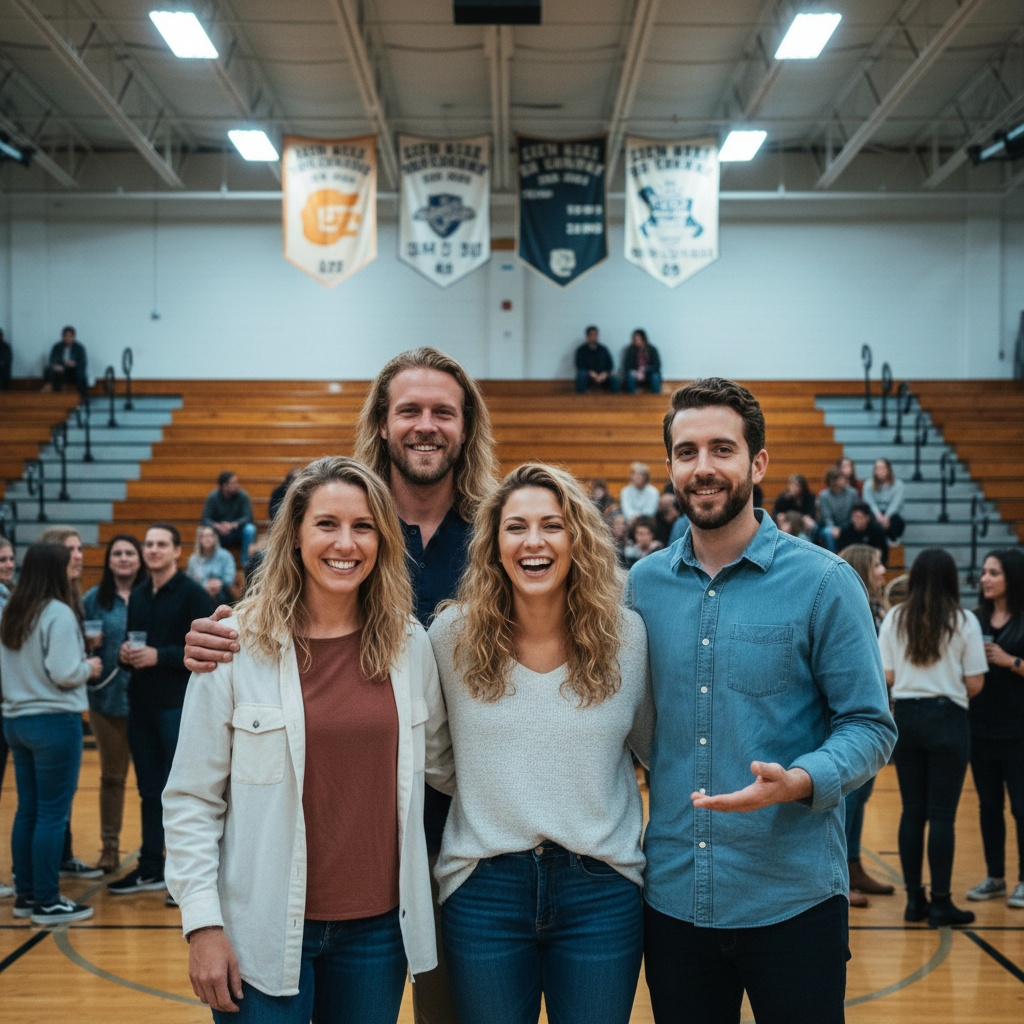
If someone who mattered could not travel, or your friend group graduated across three different years and two countries, you can still end up with one photo of everyone. TogetherLens composes a new graduation picture from one clear portrait of each person. Keep a real photograph for anything official, and label an AI-composed image when you share it.
Three scenes that fit this idea
The main entrance, early
Photograph the building before the crowd arrives. Pale stone and glass hold the gown apart from the background far better than dark brick does.
Steps and colonnades
Steps let a group stagger across several levels, which keeps faces visible. Seat the shorter people in front and put the gowns on the back row.
Held diploma or certificate
Hands holding something look purposeful. Shoot it slightly off to the side rather than dead centre so the face still leads the frame.
Cap toss, shot low
Get down low and shoot upward. Caps read better against open sky, and the low angle makes the throw look higher than it was.
With family, two rows
One standing row behind and one seated row in front. Ask parents to angle inward slightly so the shoulders overlap instead of flattening out.
With the friends you actually spent the year with
Skip the formal line-up. Stand in a loose cluster, half turned, and let the group talk for ten seconds before the shutter.
The walk between buildings
Walking photos look relaxed and give the gown movement. Shoot from the side rather than head on so the fabric has something to do.
Late afternoon on campus
The last two hours before sunset give warm light and a quieter campus. This is usually the best window for anything that includes relatives.
A department or lab that meant something
Behind the desk, next to the equipment, in front of the studio. Personal places age better than generic backdrops.
Under the year on a sign or banner
A visible year gives the photo a date without you having to write one. Check the light is falling on the sign as well as on you.
Portrait in the gown, plain background
One clean frame with a neutral wall makes the photo usable for announcements. Shoot it in shade rather than direct sun.
Everyone in one frame, wherever they are
For a class, a lab group or a family who could not all be on campus, build one shared graduation photo from separate portraits taken in each person's own city.
Choose source photos the model can read
TogetherLens creates a new composition from the people you provide. It does not need matching backgrounds, but it does need clear facial information. Start with the original file when possible rather than a screenshot downloaded from a social network or messaging app.
- One clear portrait per person, eyes open, no heavy filter
- Turn the tassel the same way on every person before you generate a group frame
- Similar light on each portrait, so nobody looks cut out of the scene
- Recent, uncluttered portraits, because gowns and busy backgrounds fight each other
- Permission from everyone included, and from any photographer whose image you use
- Keep each face fully visible and ask every living person for permission.
Generate in three deliberate steps
- Add two to five people.Use one clear portrait for each person and review every crop before continuing.
- Choose one or two vibes.Pick a scene that supports the story instead of competing with the faces.
- Inspect the result.Check eyes, teeth, hands, clothing, jewelry, and meaningful background details before sharing or printing.
What to avoid
- Dark gowns against dark buildings
- Waiting until after the ceremony to photograph people who have a train to catch
- Shooting the group photo in the one hour when nobody is looking at the camera
- Presenting an AI-composed graduation photo as a real photograph
Generated photos are creative images, not documentary evidence. Disclose that the result is AI-generated when context matters, and never use someone’s face to impersonate, embarrass, or mislead.
Questions about this portrait
When should graduation photos be taken?
Before the ceremony if the light allows, because after it the light and the crowd are both working against you. The last two hours before sunset are the best window on campus.
What should I wear under a graduation gown?
Light or mid tone clothing so the gown does not swallow you, and shoes you can stand in for a couple of hours. Keep logos and loud patterns out, since the gown is already one strong shape.
How do I photograph a big graduation group?
Use two or three staggered rows, put the tallest people at the edges, and keep everyone a little closer together than feels natural. Take one formal frame, then let the group talk for a second frame.
How much time do I need for graduation photos?
About twenty minutes for the individual portraits and stairs, and roughly thirty minutes for family and friends. Anything beyond that needs to be planned around the ceremony timetable.
What if my friends graduated in a different year or city?
You can still make one graduation photo together. Add a clear portrait of each person in TogetherLens, choose a scene, and the app composes a single picture with all of you in it.
How does the AI compose the photo?
It builds a new image from the portraits you add instead of editing the original photographs.
Is TogetherLens free?
TogetherLens is free to install on iPhone and Android. Photo generation uses paid tokens, and Premium is optional; your app store shows the price and any renewal terms before you buy.