A practical guide for “engagement photo ideas”
Most engagement photo ideas fail for the same three reasons: the light was wrong, the outfits fought the background, or the two of you were never in the same place at the same time. The list below is organised around what you can actually control, which is the hour you shoot, what you wear, and where you stand.
Plan around the light before you choose a location. The first two hours after sunrise and the last two before sunset give soft, warm light that flatters almost every skin tone and every background. Midday sun is workable only in open shade or under a canopy of trees.
Decide the shape of the session before you book anything. Thirty focused minutes in one good spot beats three rushed locations. If you want variety, change what you do rather than where you stand: sit, walk, lean on something, look away from the camera, then look at each other.
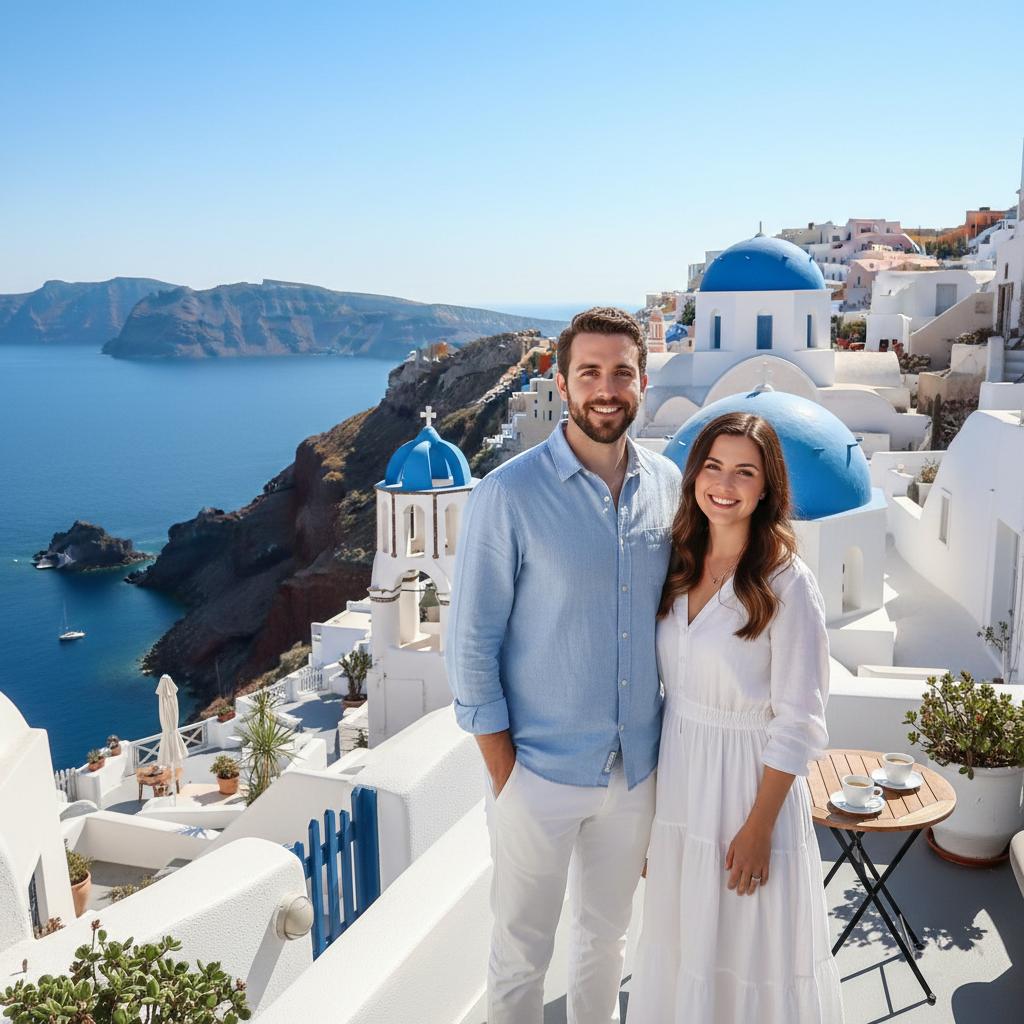
If the two of you never ended up in the same frame, because one of you was abroad, on a night shift, or the trip was cancelled, you can still end up with an engagement photo. TogetherLens composes one new picture from a single clear portrait of each of you. Keep a real photograph for anything official, and label an AI-composed image when you share it.
Three scenes that fit this idea
Golden hour in a field
Tall grass or a harvested field catches low sun and hides uneven ground. Shoot in the last hour before sunset with the sun behind your shoulders, never behind your faces.
City rooftop at blue hour
The ten minutes after sunset even out the sky and let the city lights fill the shadows. Put the skyline behind you and stand close so the two of you stay readable at that distance.
Coffee shop window
Soft window light and a table give your hands somewhere to go. Ask for the seat beside the window and sit side on to the glass rather than facing it.
Recreate your first date
Walk the route you already know. An ordinary evening recreated reads as more personal than any styled location, and you will look relaxed because you know what happens next.
Water at dusk
A lake, a dock or a quiet shoreline gives you reflections and a clean horizon. Calm water works far better than crashing surf for portraits.
Old town streets
Narrow streets bounce soft light between the walls. Shoot in the shade and let the colour of the buildings be your backdrop instead of trying to include the whole square.
Forest trail in open shade
Trees filter hard light into something even. This is the most reliable option if you can only shoot in the middle of a bright afternoon.
Your own kitchen
One window, one counter, done. This suits couples who hate being photographed in public, and the photos tend to look like your actual life.
Mountain or hillside overlook
A wide landscape needs a wide subject. Stand close together and let the two of you fill the lower third of the frame rather than shrinking into the view.
Rain and wet reflections
A wet street doubles every light source. A clear umbrella keeps you visible instead of turning into a silhouette.
The ring in context
Photograph the ring in the hand you are both holding, not on its own on a table. Context is what carries the story.
A landmark that only means something to you
A bridge, a stadium, a shop sign, the corner where you met. These age far better than whatever is trending this year.
Choose source photos the model can read
TogetherLens creates a new composition from the people you provide. It does not need matching backgrounds, but it does need clear facial information. Start with the original file when possible rather than a screenshot downloaded from a social network or messaging app.
- One clear portrait per person, eyes open, no heavy filter
- Matching light on both portraits: both outdoors, or both indoors
- Shoulders and hands visible, so the composition has room to work
- Recent photos, because a portrait from three years ago does not look like you now
- Permission from anyone whose photo you use
- Keep each face fully visible and ask every living person for permission.
Generate in three deliberate steps
- Add both partners.Use one clear portrait for each partner and review both crops before continuing.
- Choose one or two vibes.Pick a scene that supports the story instead of competing with the faces.
- Inspect the result.Check eyes, teeth, hands, clothing, jewelry, and meaningful background details before sharing or printing.
TogetherLens is free to install. Photo generation uses paid tokens; Premium is optional and auto-renewing. Check current local prices, included tokens and renewal or cancellation terms in the app before buying.
What to avoid
- Copying a trend that does not look like either of you
- Midday sun with no shade in reach
- Bold patterns on both outfits at the same time
- Presenting an AI-composed picture as a real photograph
Generated photos are creative images, not documentary evidence. Disclose that the result is AI-generated when context matters, and never use someone’s face to impersonate, embarrass, or mislead.
Questions about this portrait
When is the best time of day for engagement photos?
The first two hours after sunrise and the last two before sunset. If midday is your only option, shoot in open shade or underneath trees and keep the sky out of the frame.
What should we wear to an engagement shoot?
Choose two or three tones that sit well together and avoid large logos and fine patterns. Bring a second layer, because the temperature drops quickly once the sun is down.
How long should an engagement session last?
Sixty to ninety minutes is enough for one location and two outfits. Add about thirty minutes for each extra location, since travel usually costs you more light than you expect.
How many engagement photo ideas do we actually need?
Two or three that you both like. A short list keeps the session moving, and the best frames are usually the unposed moments between the ideas you planned.
What happens if it rains?
Wet streets reflect light and often look better than a dry backdrop. Bring a clear umbrella and something to wipe the lens, and keep one covered location as a fallback.
Can we make an engagement photo if we were never in the same place?
Yes. Add one clear portrait of each of you in TogetherLens, choose a scene, and the app composes one picture with both of you in it.
How does the AI compose the photo?
Add one clear portrait per person, pick a scene, and the app generates the picture.
Is it free?
TogetherLens is free to install on iPhone and Android. Photo generation uses paid tokens. Premium is optional; your app store shows available purchase options, prices and any renewal terms before purchase.